


On this episode we're joined by independent journalist Jordan Gass-Poore. To try to pin down one job for Jordan is hard. She has 116 projects listed under experience on her LinkedIn page. One expertise is in podcast production and reporting on topics such as climate change and public health but she does plenty of written work too.
She's a graduate of Texas State University with a Masters in investigative journalism from the University of London.
In our podcast interview, we spotlighted a podcast about environmental hazards she conceived, narrated, and produced for NJ Spotlight News, a piece she wrote about what TV and movies gets wrong about having a parent in prison, and gave advice for those entering the profession now.
Below is an excerpt of our interview that has been edited for clarity and length. For the whole interview, please listen to the podcast episode.
One example of your work is a podcast for NJ Spotlight News powered by PBS.
The most recent season of the podcast, Hazard NJ, focused on a group of chemicals in the PFAS family like Teflon. Those that are often used in products but also happen to be massive pollutants.
How does a project like that originate for you?

I was working a full-time salaried job at CNN, was an audio producer there and I wanted to get more and more into environmental reporting.
And I remembered about the times that I spent in my hometown (Seguin, Texas). When I was in high school, I actually was out for a semester. I had a chronic illness. No one really could understand at the time what was wrong. And even at that point I had done my own research and was thinking this might have something to do with environmental hazards, water quality issues and air quality issues.
I kept thinking, I want to pursue this line of work more. So I put together this idea for a podcast series where the first season was about the impacts of climate change on hazardous sites, these Superfund sites.
I pitched it originally to my boss and, they were not interested in environmental climate reporting at the time, and so I randomly stumbled across this gentleman that works at NJ Spotlight News on Twitter and he said he liked Superfund sites stories. I contacted him and he said, send me over your pitch deck.
He shared it with his boss. I had a call with the boss and he said, we greenlit the show. So then I put my two weeks notice in at CNN and I left, and I've officially been an independent journalist ever since.
There are certain tricks in audio writing and storytelling that help convey information. I heard you execute them and you'll hear them if you listen to the series. That's things like repeating for emphasis or relating a number to something graspable.
At one point you referenced parts per trillion. It's a scientific term, but think of one part per trillion as a drop of water in a swimming pool. I can understand what that is. I'm curious what are some of the other tricks that you employ?
I try to keep down numbers in scripts because when you're getting bogged down, if I hear a bunch of numbers, I tune out and it doesn't quite hit me like a text-based article where I could go back and read that section over again.
So I try to keep numbers out as much as possible. And when it's big words or words that are difficult to pronounce or words that people are not familiar with, I try to keep those to a minimum as well. And we'll try to do some very brief explainers on what that word actually means.
I wanna be very upfront with people too, where if this is hard for me to pronounce, I'm not expecting you, the listener, to also know what this is and how to pronounce it.
Also, I like a trick that I think differs from maybe some other audio producers, at least folks I've talked to.
I don't like the idea of your audience being stupid, for lack of a better word, in that you have to spell every single thing out to them. The first episode of the second season of Hazard NJ, I used some archival tape from the gentleman who discovered the first PFAS chemical. I didn't say, this is archival tape, or, he said this in 19 blah, blah, blah. I think it was pretty self-explanatory introducing who it was, where the audience would know, this man is probably not alive anymore. This happened a long time ago.
You're saving confusion by not overwhelming people.
I think my crowning achievement was when I realized writing for the ear is wanting to write like I'm talking to you, where someone's listening and they don't even think that you have a script.
One of the times I went into the studio in Newark where NJ Spotlight News is based, and we had the guy helping with the recording session and he hit record and I was reading the script and he said okay, you can start whenever you wanna start.
He didn't realize I was reading from the script He said 'It sounded like you were chatting with me.'
You're a versatile journalist too. You've written about things like the disappearance of LGBTQ spaces in Texas for a publication like Texas Monthly contrasting that you've also written about how they're thriving in New York City. You've written about power plants in Ukraine and you've written a first-person piece about what TV and movies get wrong about having a dad in prison.
That last one was for Scalawag in 2022. What was that like to write?
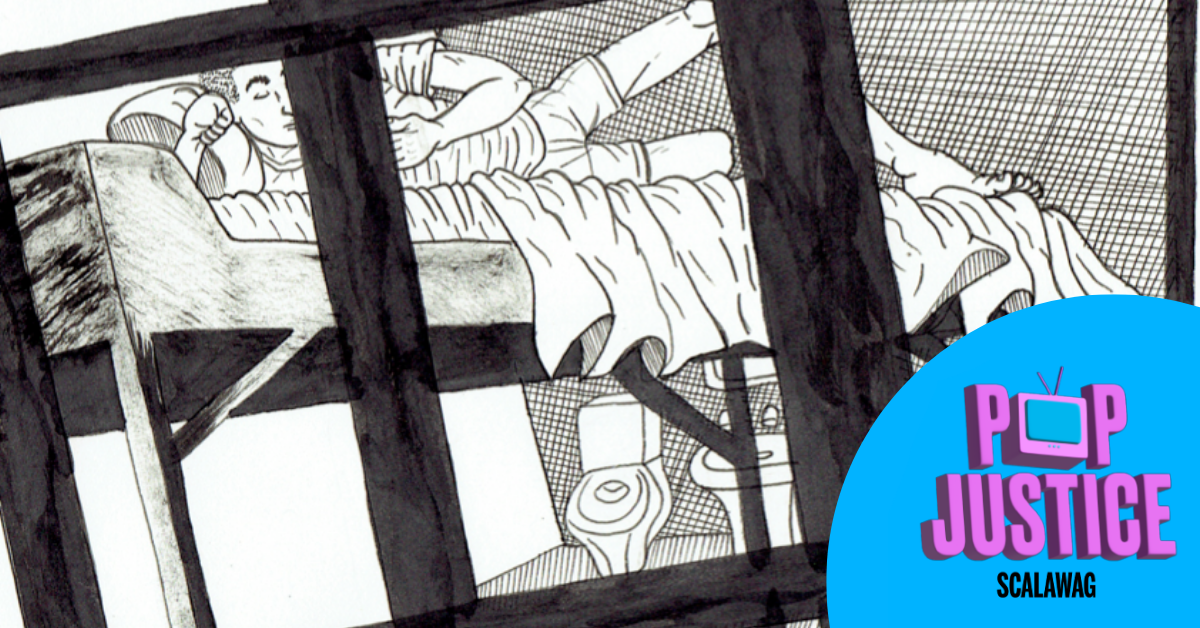
That was probably my most personal piece that I've written to date and a topic that I don't necessarily get to talk about or talk about.
I felt passionately about it because I realized that I didn't get an opportunity to talk about it, and people don't normally talk about it, but I imagine that if I went through this, that I witnessed my father getting arrested as a child and having a parent that was incarcerated off and on throughout my childhood, I couldn't be alone.
So I was ripping the band aid off As I was writing, there were times when I had to cry. I had to take a break and step away from it. But when I published it, I was surprised at the number of people in like my LinkedIn network that are professional journalists that seem really serious that sent me a note saying my mom was incarcerated when I was a child, or my dad or a family member was incarcerated.
I remember one person said 'I would never write about that experience because I'd be afraid I would be looked differently from my employer. But I'm glad that you were able to'
What's the most important thing for a young journalist to know about entering the profession?
One of the things I wish that I would've had explained to me is that journalism is going to constantly change. When I first experienced a newsroom where people were getting laid off, it really scared me and I had to think about, do I really wanna do this? And I think also with that in mind, journalism's always gonna change, but you have to interrogate why do you wanna do journalism?
This is a career where you need to have a good understanding of why you wanna get into this. And what do you want to get out of it? And I hope that people think of being a journalist as a public service and that you're a public servant as opposed to a celebrity because that would help your journey.
Is the freelance independent route financially viable for you and for others?
I'm able to do this full-time. 100% of my work is in journalism and it is mainly in writing about environments and climate. And I'm extremely lucky that I don't have to do work in another sector, another industry.
But it is going to be a lot of work that's outside of the actual journalism. Meaning you also have to wear so many different hats and realize like there's aspects of the job that you never thought you'd have to do.
Self-promotion is weird for people and it's weird for me. You're the agent and the manager. This is a business. Thinking of it now as a business has been weird. But to be able to do this 100% full-time, you gotta think like that.
In 2025 we had a new episode each week and featured more than 60 guests. I don’t know that we were the most diverse journalist interviews podcast out there, but we certainly tried to be.
We look forward to bringing you more journalist interviews in 2026 but we can use your help. Tell a friend, a relative, a colleague about us and let them know that our episodes are worth their time.

A reminder to professors and teachers
You can find episode guides that you can use if you wish to integrate the podcast within your classroom. There are more than 50 available. Each one has suggested questions for discussion and activities a class can do.
I’m also happy to help you find an episode that would be appropriate for what you’re teaching. Reach out to me at [email protected].
Additionally, I’ve curated some of the 2025 episodes into groups. If you’re teaching a class or unit in any of these subjects:
- Investigative Journalism
- Feature Writing
- Covering government policy
- Social justice, immigration, and identity
- Local News

Check out the sets of episode guides that would be useful to you. I don’t have a good term for them, so I’m borrowing from Bluesky and calling them “Starter Packs” - sets of 5-8 episodes in each category that may be useful in your classroom.