


Part of painting the picture of the realities of being a journalist in 2025 means showing the more difficult and challenging aspects of it.
So I appreciated when Huron (South Dakota) Plainsman managing editor Ben Chase reached out to ask if he could come on the podcast for a second time to talk about what's happened at his newspaper in the last year. Ben was one of our early guests on the podcast in 2021 when he was a reporter and we spent much of that conversation talking about what small-city (population 15,000) journalism looks like.
We did so again in 2025 from a different perspective. The Plainsman was shut down briefly and then sold to a new owner that specializes in small newspapers. They implemented a few changes, most notably cutting the number of days with a printed paper from 5 to 2 and a request that everything be geared locally (no more AP stories) – to a community that's more diverse than you might think (the town has a large number of refugees from Myanmar and a relatively large Hispanic population).
Here's some of what Ben talked about in our conversation.
How have things changed?
The goal is to have local news. What has drastically changed in our paper is the percentage of what is local. I went back and looked and in a week in July, we printed 62 pages of papers over five days, and there was 28 pages of local content, which is great. That's a really good number.
In October, I did the same thing in a week, and in two editions we printed 32 pages with the same 28 pages of local news. That is a huge percentage difference. Every time you're turning a page, it's to something local. We have advertisers coming back that hadn't advertised in with us in years.
It's really been noticeable within the community that this is a paper of theirs. This is not a paper of whatever random story is going on in Washington D.C. or overseas. This is what's happening right here in this area.

I followed up asking about the impact on staffing
Within the entire paper, there's roughly 20 employees, and that includes, we our own printing in-house, and that's where most of our employees actually are, is part-time employees that work down in the print area and assist in printing papers …
When we came back they said that everyone has the opportunity to remain in their jobs. For some folks that could mean that they have to move to a different location, because pagination of the paper is done in a central location. They're slowly transferring from papers they've purchased into their central pagination. We haven't transferred yet. That's going to take a lot of hours off my day. On the ad design side, they have a centralized ad design as well. We have a couple of employees in that area. If they want to remain with the company, they absolutely could. It would require them to move to Ohio or Kentucky … one may consider it and one that absolutely won't.
You are in some respects the editorial voice of the paper and even though you're not writing editorials, you're writing a weekly opinion piece. You've written about how politicians act, you've written about unity, you've written about the story of Christopher Columbus.
Every column begins with a song quote. And I'm curious if you could just go into what goes into writing these pieces?
I start with the idea of what I want the article to be, but then my next thing to find a song that I think ties to it.
I am a huge music person. I believe that I can listen to the radio and it doesn't take very long, and lyrics will speak to me, whatever's going on in my life. I can be listening to any genre of music and I've had everything from big band stuff, Frank Sinatra from that era all the way up to modern hip hop. I've had Christian music, hard rock music.
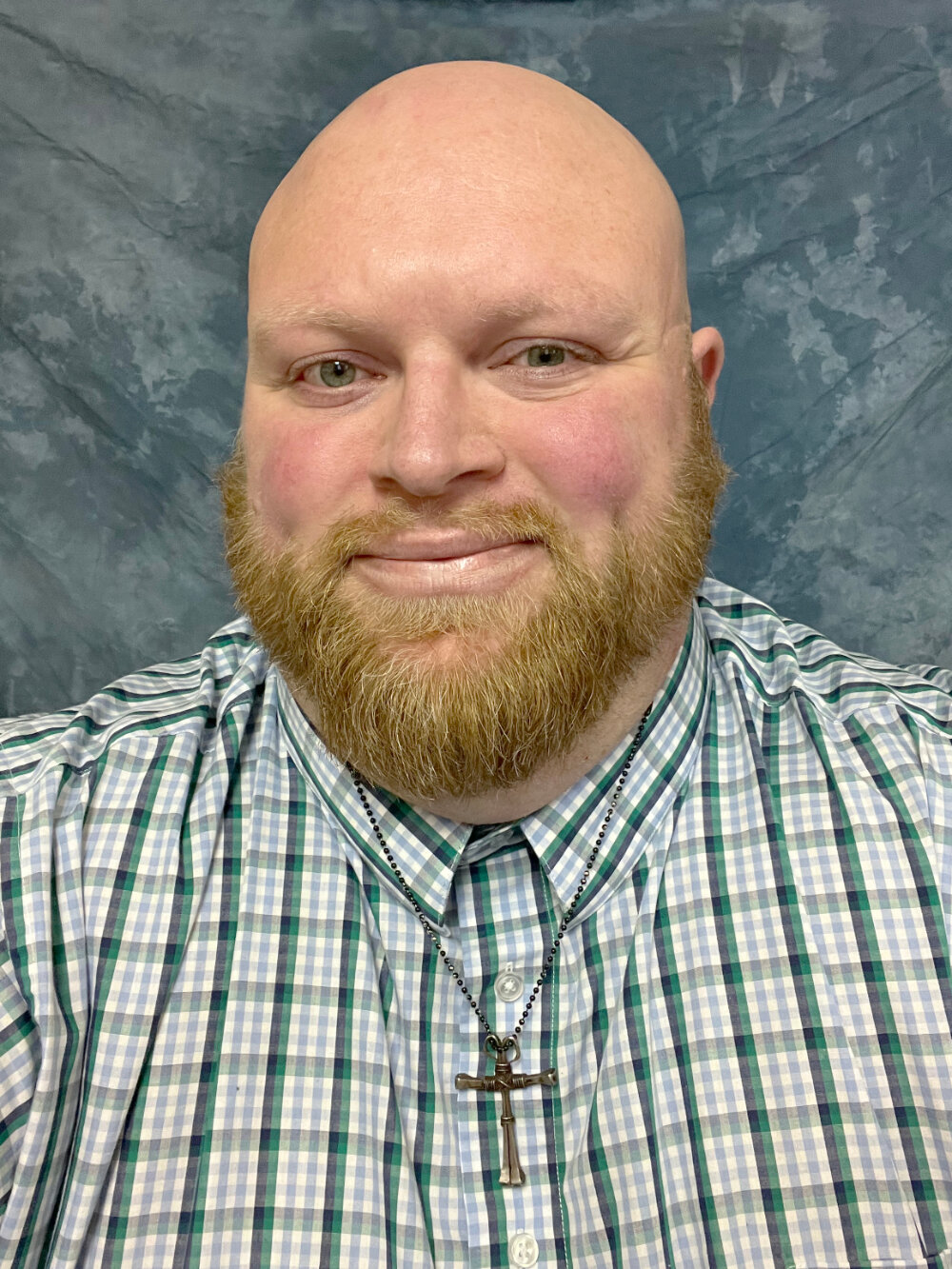
The fun part is about a year ago I decided to start linking a YouTube to the song itself when I post it on the web, and so folks can actually go and listen to it. I immediately had a reaction from a guy who said, I really like the lyrics and I clicked on the song, and I would never listen to that song again, which is great.
Usually what I'm trying to do is just find a tie-in to the message of the piece. And then for me it's usually kind of fun to do a little background research on where did that song come from, how did it come to be? And I put a little bit about that. I try to keep that to about two paragraphs, to open things up, and then allow that to kind of be my opener into the rest of the piece.
If you want to check out more of my interview with Ben, check out the podcast.

A reminder to professors and teachers
You can find episode guides that you can use if you wish to integrate the podcast within your classroom. There are more than 50 available. Each one has suggested questions for discussion and activities a class can do.
I’m also happy to help you find an episode that would be appropriate for what you’re teaching. Reach out to me at [email protected].
Additionally, I’ve curated some of the 2025 episodes into groups. If you’re teaching a class or unit in any of these subjects:
- Investigative Journalism
- Feature Writing
- Covering government policy
- Social justice, immigration, and identity
- Local News
Check out the sets of episode guides that would be useful to you. I don’t have a good term for them, so I’m borrowing from Bluesky and calling them “Starter Packs” - sets of 5-8 episodes in each category that may be useful in your classroom.