


On this episode we're joined by Chalssea Kate Echegoyen and Karis Tsang. They are the editor in chief and the managing editor of The Varsitarian, the award-winning student newspaper at the University of Santo Tomas, the largest college in the Philippines.
The Varsitarian won multiple awards at The College Media Association convention in New York in March. Among the awards was 'Best Newspaper' and the making of that issue was part of the conversation on this episode of the podcast. An excerpt from that part of the discussion, edited for clarity and length, is below.
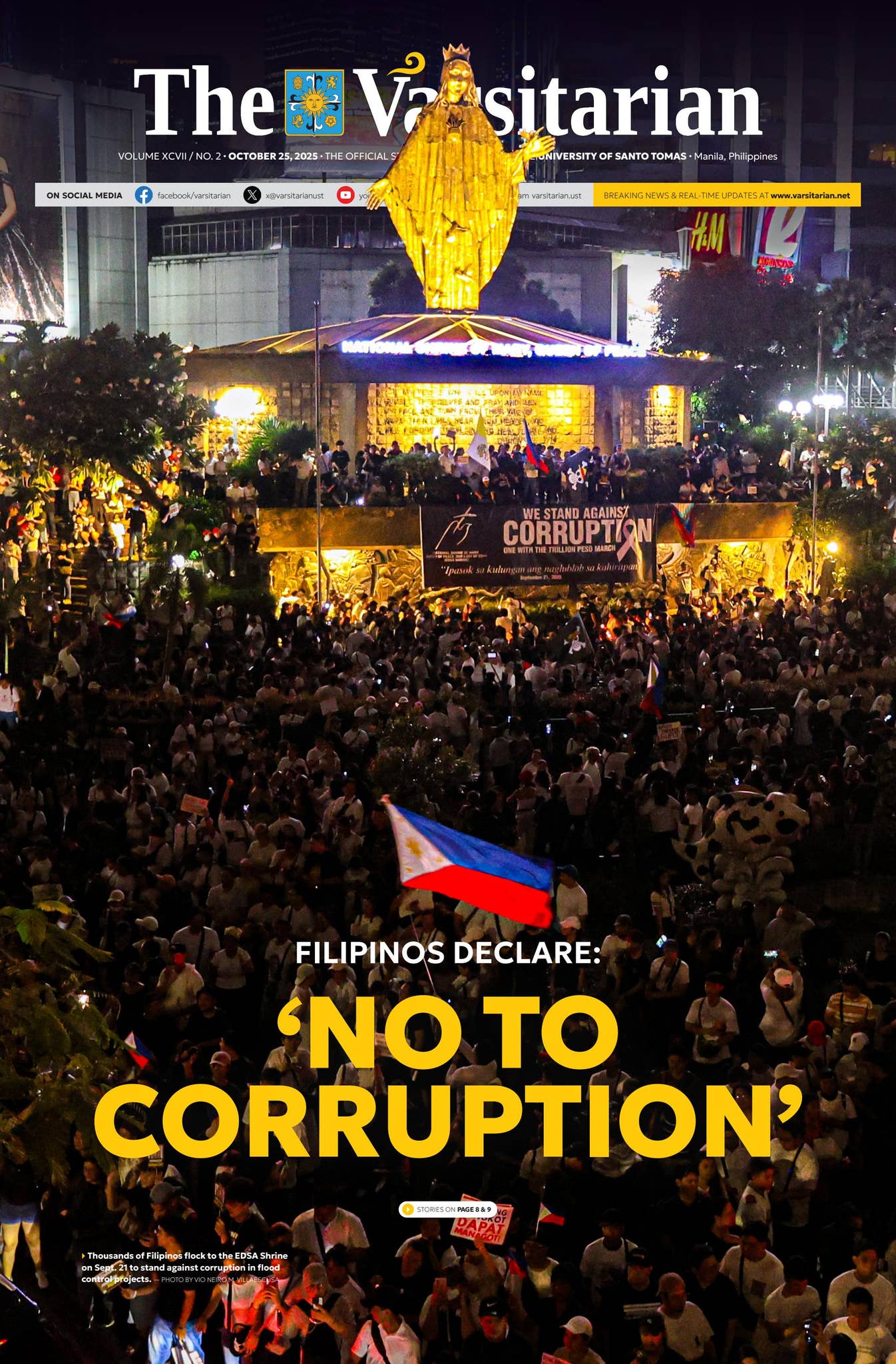
The issue that won for Best Newspaper at the awards was from last October, 'Filipinos Declare No To Corruption.'
This was a 16-page edition with a terrific cover photo showing the protest against the government and corruption related to flood recovery. There was news coverage and editorials throughout the paper. It was a pretty good issue adhering to the theme. Can one of you take us from the idea for the issue to the finished product and explain the work that went into it?
Chalssea: At that time, corruption really was a huge issue in the Philippines, especially with those flood control ghost projects being exposed.
There were protests everywhere, a lot of public frustration, and we did a whole lot of coverage about it. So I was thinking about how do we go beyond just reporting the news day-by-day? Because at some point it's not enough to just say this happened and this happened. So we wanted to step back and ask what does this say about the country as a whole?
So that's where the idea of a thematic issue came in. So instead of treating corruption as separate stories spread out in different pages, we thought, what if we bring everything together into one edition that really captures the scale of of the entire problem? And that's when we decided that, okay, this isn't just a news event anymore. This is a national moment.
That protest photo on Page 1 … it visually answers the question: 'Are people actually reacting to this?' And yeah, it captured that the answer is yes …
I remember thinking it's important that we don't just talk about people, we also speak to them. At that point it really became a collaborative effort inside The Varsitarian. So everyone had a role. Our reporters and writers were out there gathering details, doing legwork for different coverage. Then we have our editors doing all the necessary edits for each article and then of course our layout artists who made sure the pages flow as one story, not just separate pieces.
I think the goal was simple, but quite ambitious. So when someone reads this issue, they shouldn't just be informed. They should understand the weight of what's happening.
A technical question. This is something that I noticed through this edition and in some of the other stories I saw. The text of the stories is in English. The quotes are in Filipino. Can you explain why that is?
Chalssea: In The Varsitarian and I think in Philippine journalism more broadly, it's very common to see stories written in English and Filipino, but quotes are sometimes in Filipino … That's actually very intentional, a hallmark of Philippine journalism.
It's about balancing clarity. Since it is how many Filipinos would understand the story and just to make sure that the facts are clear, but the voices are real.
I want to quote the editorial and talk about how you wrote it.
There are our leaders who campaign to uphold our rights to promote peace and justice, but all along it was them, a whole cabal of shameless interests that stole not only people's money, but also their dignity, their hope, their very chance at safety and survival.
Karis: At the end of the day, we're all still Filipino, so this issue felt really personal for us because at some point in our lives, we've at least once experienced catastrophic flood disasters in our cities or in our provinces.
So, seeing how the flood control corruption issue has sparked into this level of awareness towards the people, it sort of ignited a fire within us to write something about this issue that would really target those who should be accountable.
As journalists specifically in the student paper, it is also part of our responsibility to help put light and to continue the, anger or the passion to keep fighting this issue, to continue fighting for accountability because until now, even if it has been months since the since this issue, we still don't really have clear signs of politicians being actually put into accountability.
So as long as we don't see necessary steps on putting these people behind bars, we will still continue using our platform to keep this issue alive. We make sure to use that responsibility wisely and to actually use that energy towards issues that are really important for our country, not just towards the student in our university.
If you want to hear the rest of our conversation with Chalssea and Karis, please listen to the episode.
In 2025 we had a new episode each week and featured more than 60 guests. I don’t know that we were the most diverse journalist interviews podcast out there, but we certainly tried to be.
We look forward to bringing you more journalist interviews in 2026 but we can use your help. Tell a friend, a relative, a colleague about us and let them know that our episodes are worth their time.

A reminder to professors and teachers
You can find episode guides that you can use if you wish to integrate the podcast within your classroom. There are more than 50 available. Each one has suggested questions for discussion and activities a class can do.
I’m also happy to help you find an episode that would be appropriate for what you’re teaching. Reach out to me at [email protected].
Additionally, I’ve curated some of the 2025 episodes into groups. If you’re teaching a class or unit in any of these subjects:
- Investigative Journalism
- Feature Writing
- Covering government policy
- Social justice, immigration, and identity
- Local News

Check out the sets of episode guides that would be useful to you. I don’t have a good term for them, so I’m borrowing from Bluesky and calling them “Starter Packs” - sets of 5-8 episodes in each category that may be useful in your classroom.